
Immersive 3D exploration
of astronomical data, with a voice-driven AI Assistant
StarGateVR
Before analysis,
there is noticing.
An astronomer studying Gaia data may be looking for a candidate group of stars: stars that share position, motion, color, brightness, and distance in a way that suggests a common origin. But in a table, that evidence is scattered across many columns.
So the astronomer makes one 2D plot after another, trying to hold all those relationships in mind at once. Each view shows part of the story, but none quite answers the question: do these stars really belong together?
StarGateVR gives those scattered relationships a spatial form. The astronomer can see shape and motion together, select what appears coherent, and bring a sharper, testable hypothesis back to their analysis tools.
Because the best analysis does not begin with every possible calculation. It begins with a better question.
Whether the question is a moving group, a stellar stream, or an unexpected outlier, StarGateVR helps researchers notice structure before they commit to the next calculation.
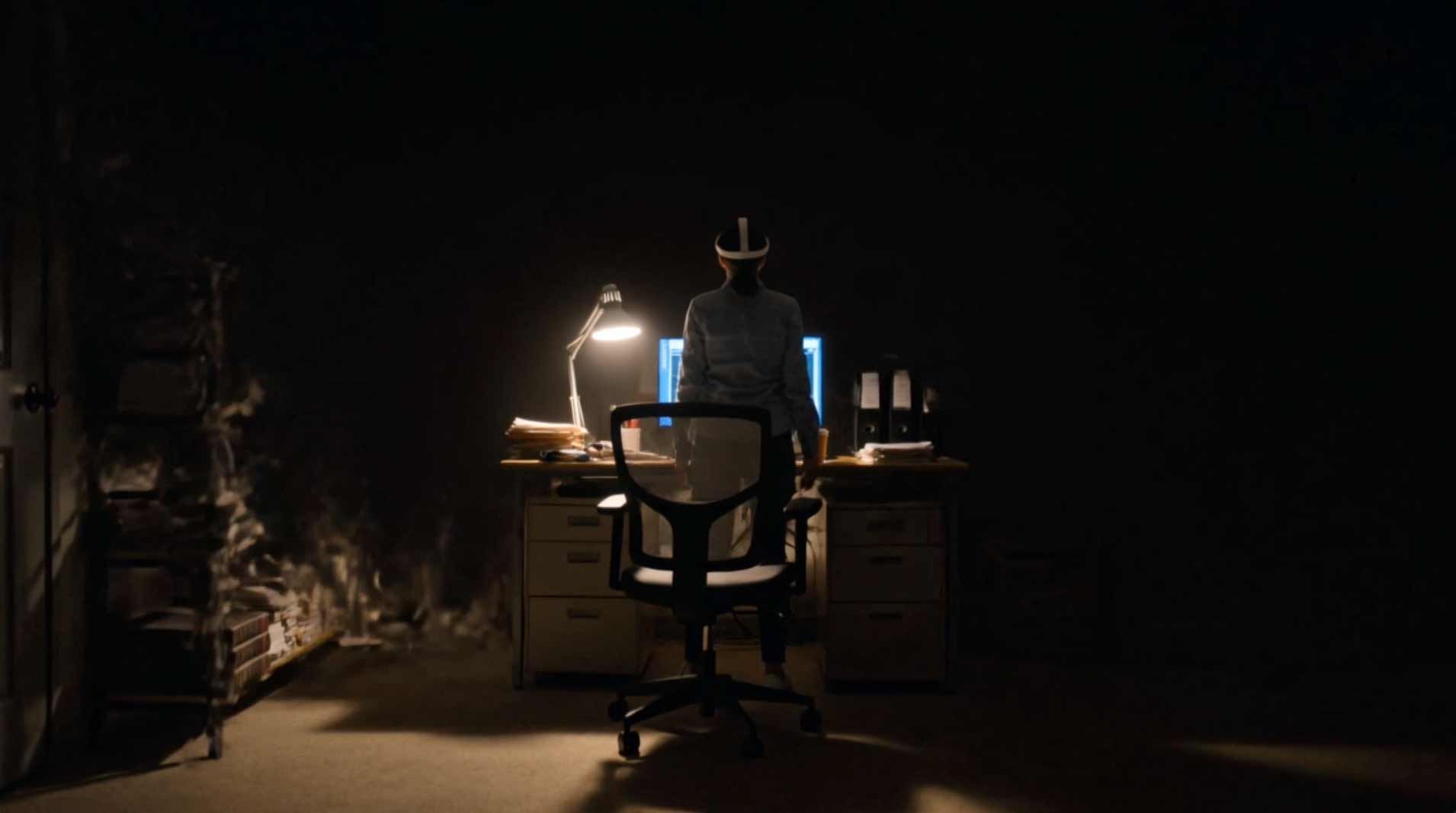

Two researchers explore dust cloud induced stellar reddening around the M4 globular cluster
What StarGateVR actually does
- Interactive Gating
- Voice queries
- Multi-wavelength enrichment
- Live archive access
- Live collaboration
- All in immersive 3D
Research Applications
These scenarios illustrate how StarGateVR’s AI Assistant, multi-wavelength cross-matching, and immersive gating work together in practice.
Multi-wavelength candidate identification. Start with a catalog of hot white dwarfs. Ask the assistant to enrich with WISE mid-infrared photometry and look for infrared excess — a possible sign of a debris disk or low-mass companion. Add GALEX ultraviolet data to confirm the hot component, then pull eROSITA X-ray detections to check for coronal activity or accretion signatures. Gate on the IR-excess candidates in color–color space, switch to an HR diagram to verify their evolutionary status, and export the filtered subset for spectroscopic follow-up.
- Combines four archives (Gaia + WISE + GALEX + eROSITA) in a single session
- Iterative gating narrows candidates across parameter spaces
- Exported CSV feeds directly into TOPCAT or astropy pipelines
Stellar neighborhood exploration. Say “Get me stars within 5 parsecs of Vega” and the assistant resolves Vega’s coordinates via SIMBAD, constructs a 3D cone query against the Gaia Archive, and loads the results into VR. Fly through the local volume in physical XYZ space, switch to a velocity view (UVW) to identify co-moving groups, then enrich with SIMBAD spectral types to classify the neighbors. This is how you turn a single spoken sentence into an interactive 3D survey of a stellar neighborhood.
- Natural-language query — no ADQL required
- Automatic coordinate resolution, parallax constraints, and 3D positioning
- Velocity animation reveals kinematic structure invisible in 2D charts
Collaborative hypothesis testing. Two researchers share a VR session. One proposes that a spatial over-density is a dissolving open cluster; the other is skeptical. Together they gate the candidate members, switch to UVW velocity space to check for common motion, enrich with metallicity from Gaia DR3, and plot an HR diagram — all while discussing via the built-in voice channel. The AI Assistant hears both researchers and responds to whoever is asking. Within minutes they have a testable candidate list, exported and ready for publication-quality analysis.
- Real-time shared exploration with synchronized data and voice
- Hypothesis → evidence loop completed in a single session
- Multi-dimensional gating builds the case (or breaks it) interactively
Technical Documentation
Looking for an educational experience?
ConstellationsVR is our entry-level 3D astronomy app with a built-in AI Guide — designed for classrooms, STEM programs, and curious minds.
Do you need more performance overall?
StarGateVR runs natively on Meta Quest, but for very large datasets, a Windows desktop version is available with higher memory and GPU-accelerated rendering.
Contact support@immsci.com for details.

How intent classification, archive queries, and cross-matching work under the hood
Supported query patterns, examples, and tips for effective voice interaction
Publications
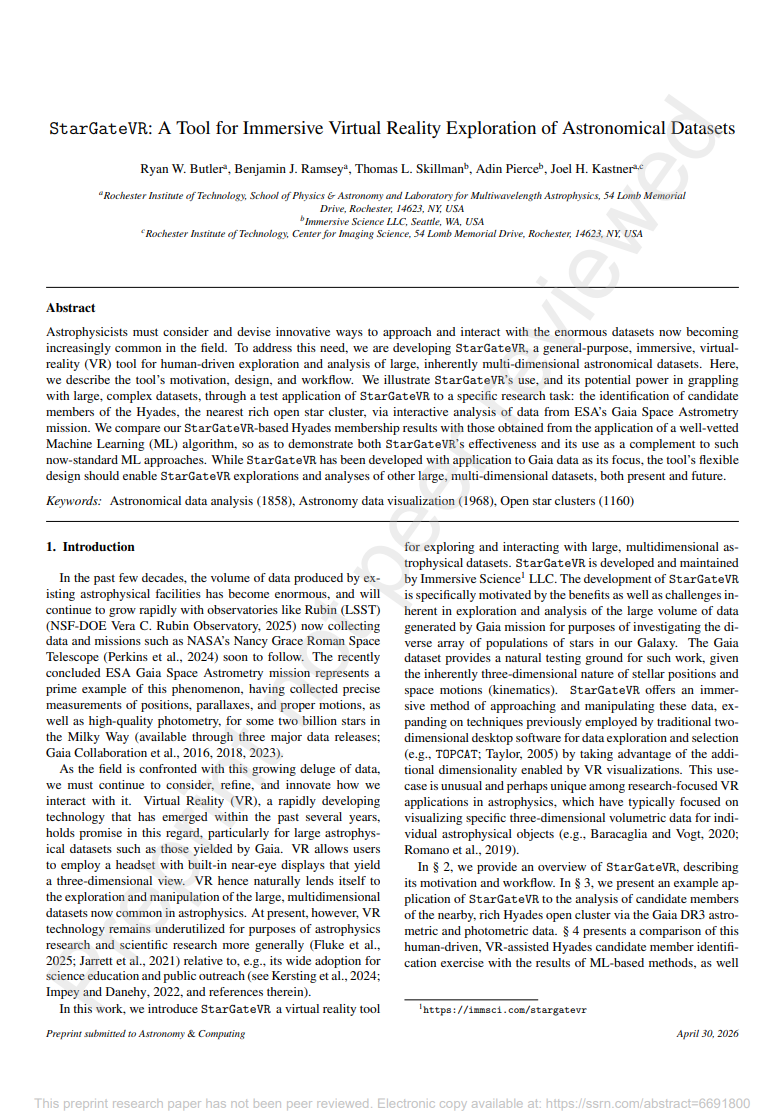
StarGateVR: A Tool for Immersive Virtual Reality Exploration of Astronomical Datasets
Research Posters
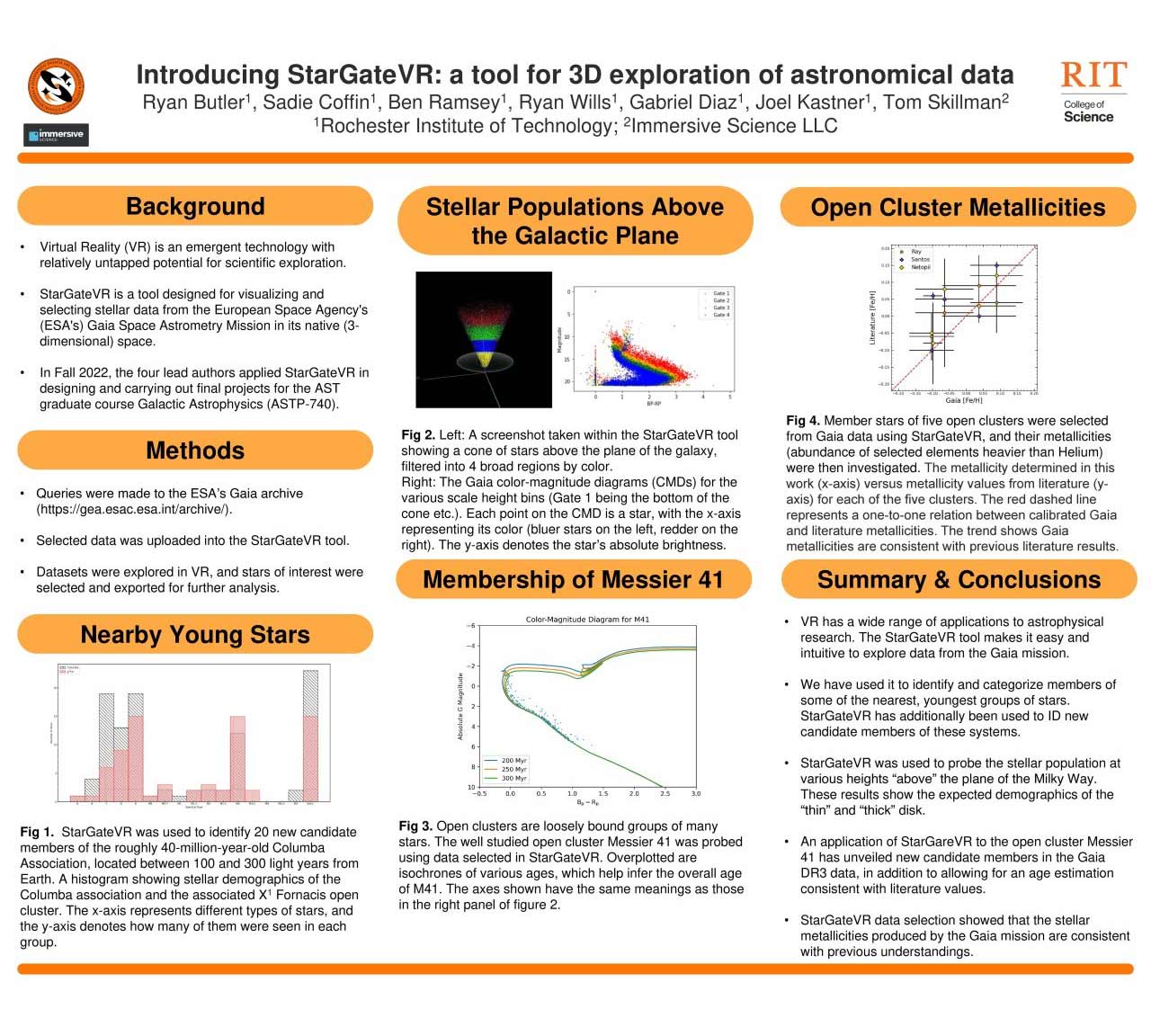
April 5th, 2023 | Graduate Education Week Showcase
Winner of the “People’s Choice Prize” at the Rochester Institute of Technology
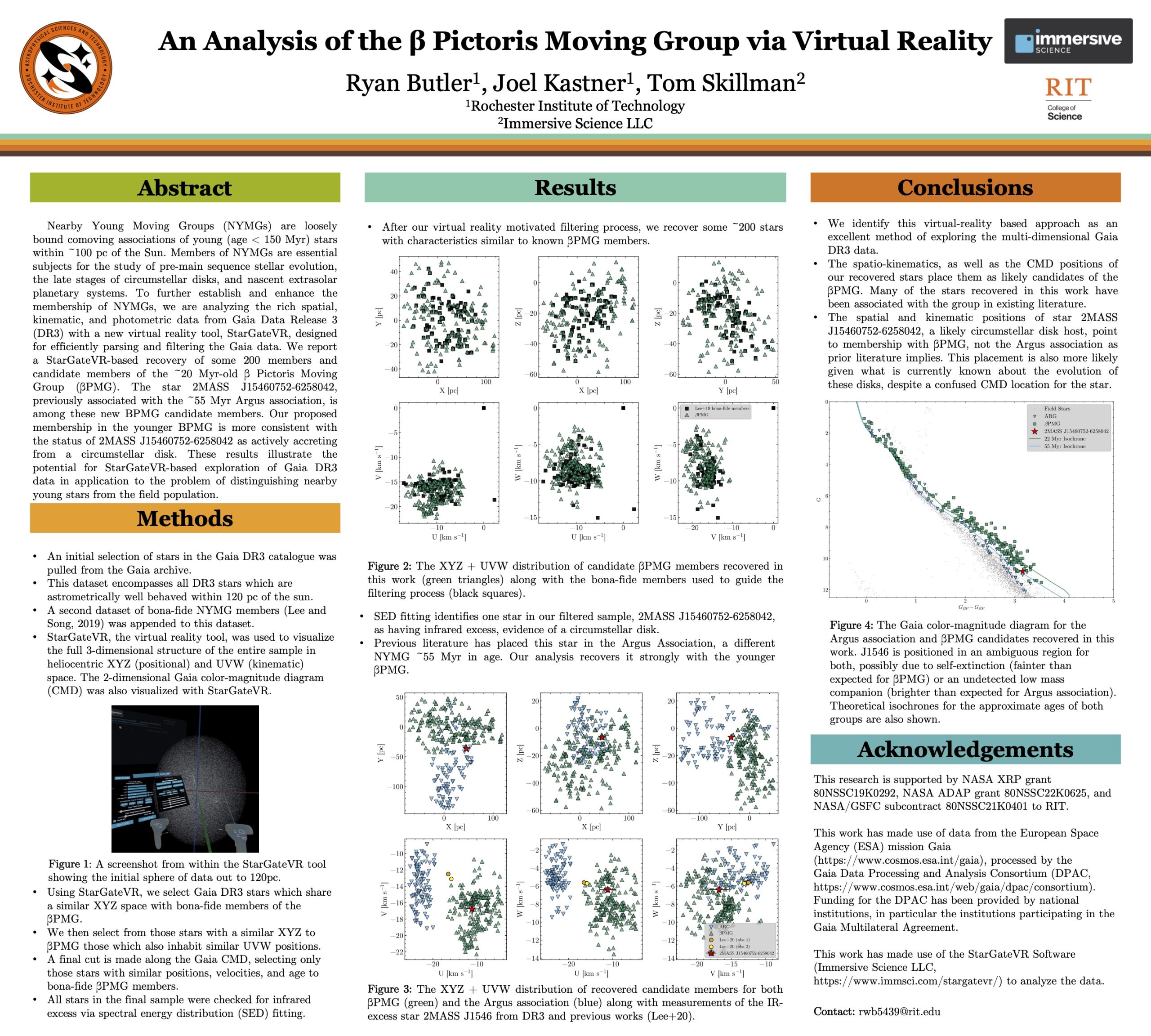
November 3rd, 2023 | Ryan Butler, Joel Kastner, Tom Skillman
An Analysis of the Pictoris Moving Group via Virtual Reality
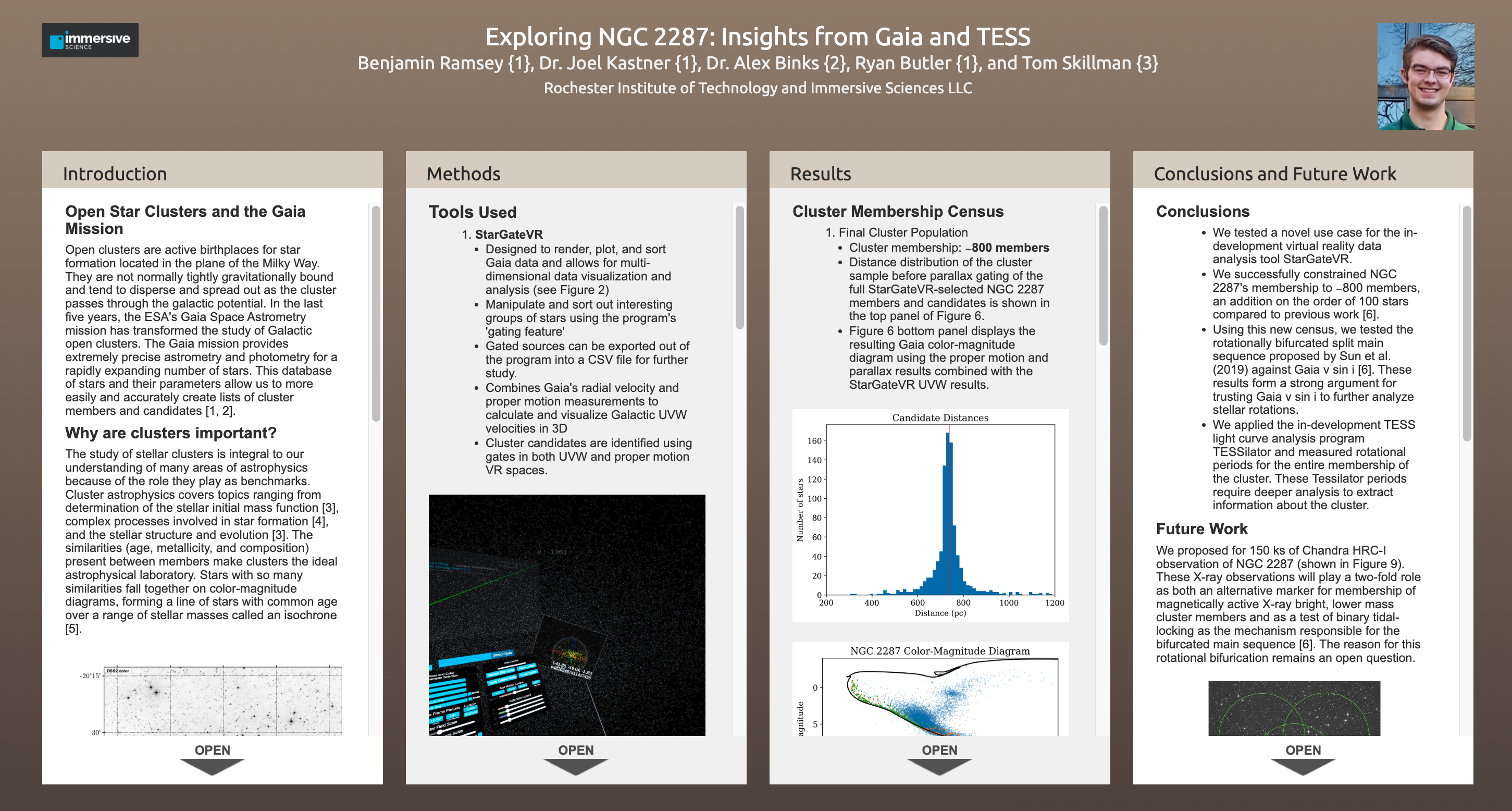
January 2024 | Ben Ramsey, Joel Kastner, Alex Binks, and Tom Skillman
Exploring NGC 2287:
Insights from Gaia and TESS
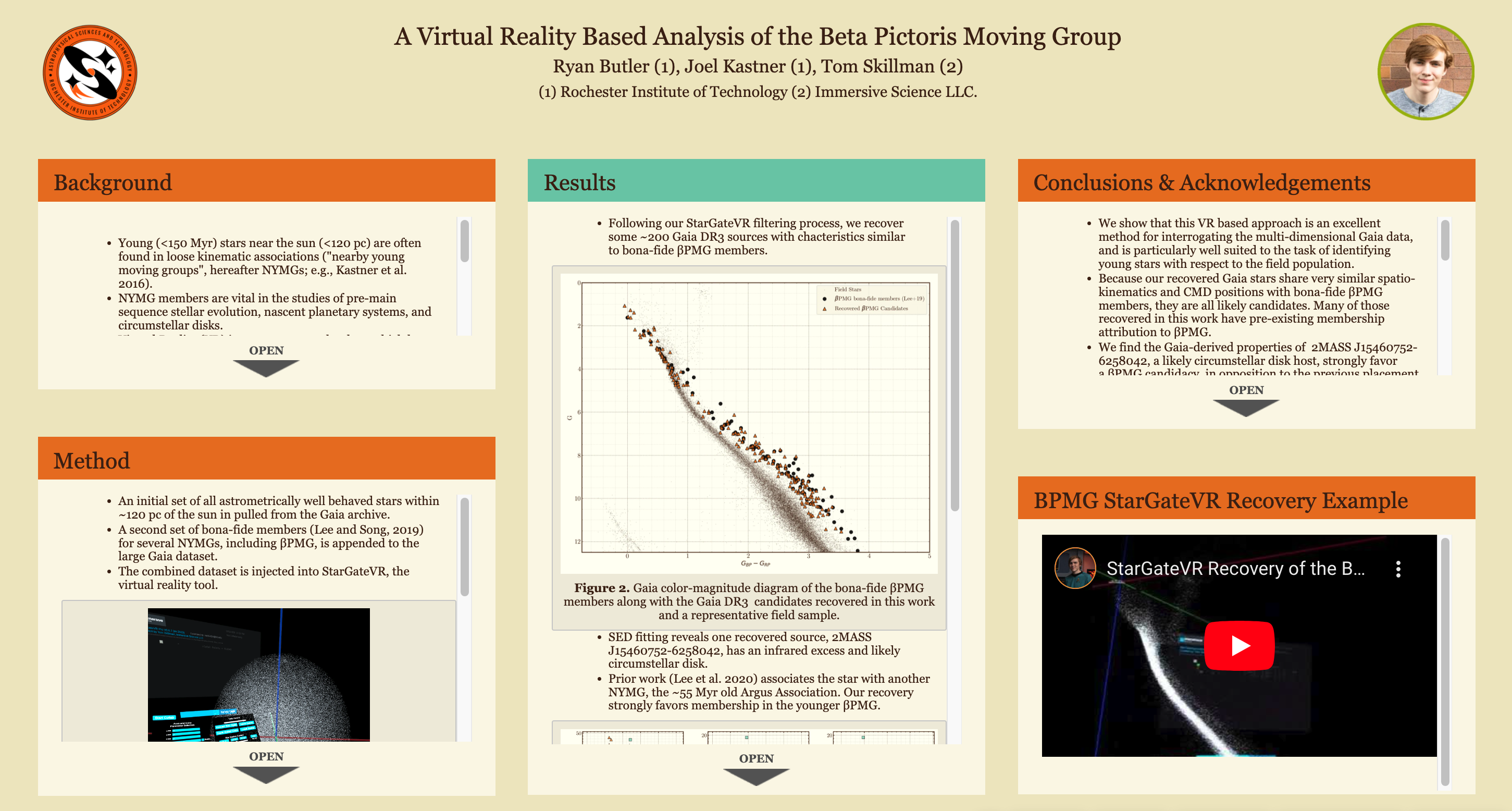
January 2024 | Ryan Butler, Joel Kastner, Tom Skillman